
POST-QUANTUM FIRST (FIPS 204 ML-DSA) · TEPHRA GOSSIP-ABOUT-GOSSIP FINALITY · GEODE KOALABEAR STARK PRIVACY
Dark obsidian mountain valley with glowing teal Silica crystals and finalized block ridge
SILICA PROTOCOL · RELEASE ARCHITECTURE V2 FIPS 204 ML-DSA GEODE STARK PRIVACY

Post-Quantum First.
Sub-Second Fast.
Private by Design.

Legacy blockchains bolt quantum defenses and privacy onto aging elliptic-curve rails. Silica Protocol is architected from genesis around NIST-standardized lattice cryptography, Tephra gossip-about-gossip deterministic ordering, and Geode KoalaBear STARK-shielded state.

Silica Crystalline Core
CRYSTALLINE STATE ENGINE
Tephra Ingress → Tephra → Crystallite → Lithification → Cali

ARCHITECTURAL MANDATE · THREE PILLARS

Engineered for the Post-Quantum Era, Without Compromising Speed or Privacy.

Most networks treat post-quantum signatures as a distant hard-fork problem and privacy as an external mixer. Silica integrates lattice security, deterministic parallel execution, and zero-knowledge shielded state into one unified protocol specification.

Pillar 01 · Release Requirement

POST-QUANTUM FIRST

Quantum-Resistant From Genesis

ECDSA and Ed25519 keys expose public keys on-chain, leaving legacy chains vulnerable to quantum forgery. Silica mandates post-quantum primitives across account ownership, validator quorums, and finality proofs.

NIST FIPS 204 ML-DSA ML-DSA-44 / 65 / 87

Module-Lattice digital signatures for native accounts, consensus events, and Lithification certificates, paired with BIP39 deterministic lattice key derivation (ml-dsa-bip39).

COMPACT & AGGREGATE PQ FN-DSA · AERIE · ML-KEM

Kyber768 (ML-KEM) transport encryption, fixed-point Falcon-1024 (FN-DSA) profiles, Aerie lattice aggregation, and 5-group PQ beacon research.

Canonical Registry: SPR-001..009 Inspect PQ Stack →

Pillar 02 · Mechanical Sympathy

BLISTERING DETERMINISTIC SPEED

Virtual Voting & Parallel Lanes

Silica eliminates vote-message storms and leader bottlenecks. Nodes reconstruct a shared gossip-about-gossip event DAG and derive identical proposal order locally, then execute in parallel across conflict-free state lanes.

TWO-TIER UX FINALITY DESIGN TARGETS

100–300ms pre-final DAG quorum visibility for instant UX, followed by 0.8–1.5s permanent local Crystallite apply (zero reorgs).

CRYSTALLITE + TIGERBEETLE DISCIPLINE 4–16 LANES / SHARD

Access-list conflict routing, 64-byte cache-aligned hot structures, static memory pools, bounded queues, and zero dynamic allocations on hot paths.

Target: 20–40k TPS / Shard Explore Tephra & Crystallite →
Pillar 03 · Shielded State

POST-QUANTUM CONFIDENTIALITY

Geode Shielded Notes & STARKs

Classical zk-SNARKs (Groth16, KZG) rely on elliptic pairings broken by quantum computers. Silica's Geode privacy subsystem uses hash-based Plonky3 STARKs and lattice commitments for quantum-aligned confidentiality.

GEODIZE · SLIP · EXTRACT GEODEKB1 / GEODETX2

Shield public balances (Geodize), transfer privately (Slip), or unshield (Extract). Private witnesses and spending secrets never leave the local wallet.

KOALABEAR D5 HIDING-FRI + STEALTH p120-LEAF PROFILE

Plonky3 quintic extension field STARKs with proved lane projection (~4× faster proving), one-time stealth addresses (/privacy/stealth/*), and lattice value commitments.

Zero Trusted Setup · Hash-Based Inspect Geode Privacy →

CRYPTOGRAPHIC & SYSTEMS MATRIX · HONEST ENGINEERING BENCHMARKS

Why Legacy Chains Cannot Retrofit What Silica Builds In.

Post-quantum signatures are 20–40× larger than classical ECDSA signatures, and hash-based STARK proofs require high-throughput verification lanes. A blockchain can only be PQ-First and Private at scale if its data plane (Tephra Ingress) and execution engine (Crystallite) are built from day one to amortize lattice and STARK payloads.

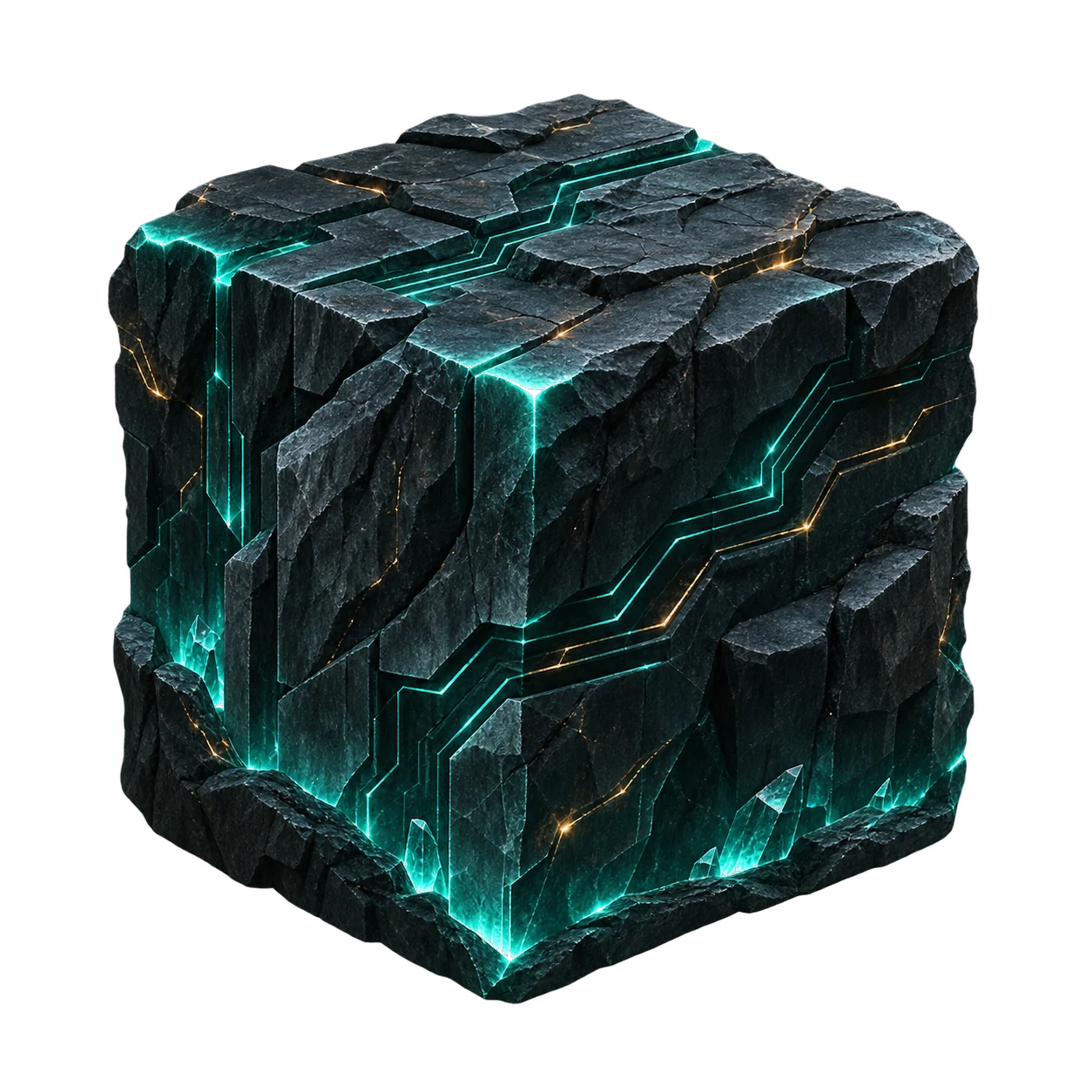
Faceted obsidian Silica block with glowing teal crystal circuits
Lithification Anchor

Quantum-Sealed Blocks

Every committed Lineation packages state roots, GPoD latency digests, PoUW work receipts, and ML-DSA validator signatures into replay-verifiable checkpoints.

Architectural & Cryptographic Comparison

Silica rows reflect implemented subsystems and disclosed cryptographic posture in the SPR Catalog. No fabricated live TPS counters.

SPR-001..009 Registry →
Capability / Layer Silica Protocol (Active Architecture) Solana Ethereum Bitcoin
Account & Consensus Signatures NIST FIPS 204 ML-DSA-44/65/87 + Fixed-Point F13 FN-DSA-1024 (Draft FIPS 206) & Aerie Ed25519 (Quantum-vulnerable) ECDSA / BLS12-381 (Quantum-vulnerable) secp256k1 Schnorr/ECDSA (Quantum-vulnerable)
Transport & Key Exchange Hybrid X25519MLKEM768 (NIST FIPS 203) Encrypted QUIC Transport Classical QUIC / TLS Classical RLPx / secp256k1 BIP324 Classical Elliptic Curve
Ordering & Finality Path Tephra Gossip-About-Gossip Virtual Voting → 100–300ms Pre-Final / 0.8–1.5s Finality (Target) Leader PoH + Tower BFT (~2.5s–12s) Gasper Slot/Epoch (~12.8 min finality) Probabilistic Nakamoto (~60 min)
Execution Engine Crystallite Parallel Deterministic Lanes (Access Lists + 64B Cache-Aligned Hot Paths) Sealevel Parallel SVM Sequential EVM Stateless UTXO Script
Protocol-Native Privacy Geode Shielded Notes (KoalaBear D5 Hiding-FRI STARKs) + Stealth Addresses + Lattice Commitments Classical ElGamal Token Extensions External L2s / Classical Pairing SNARKs Transparent Public UTXO Graph
External Work & Geography Proof of Useful Work (PoUW / NUW science tasks) + H3 Geographic Proof of Distribution (GPoD) Pure PoS (Datacenter-concentrated) Pure PoS SHA-256 Hash-Puzzle PoW

CONSENSUS SOURCE OF TRUTH · LAYERED ARCHITECTURE

One Canonical Ordering Truth. Six Specialized Layers.

Every layer in Silica has a strict responsibility boundary. Tephra consensus order is the only ordering truth—downstream layers execute, prove, and monitor that order without inventing a second consensus path.

Read Full Pipeline Specification →
Stage 01 · Data Plane

Tephra Ingress

Silica's Narwhal-inspired transaction admission, micro-batching, and payload dissemination front end. Decouples high-volume network fanout from ordering logic.

Admission → Micro-Batching → Payload Fanout
Stage 02 · Gossip Sync

Tephra Event DAG Sync

Peers exchange unknown events via gossip-about-gossip, recording causal ancestry (self_parent and other_parent links) so every honest node reconstructs the same event graph.

Self/Other Parents → Shared Causal DAG
Stage 03 · Ordering Truth

Tephra Virtual Voting

Structural witness rules and local virtual voting derive a canonical proposal order directly from the event DAG—eliminating extra vote-message round trips.

Same Event DAG = Identical Proposal Order
Stage 04 · Execution Apply

Crystallite

Executes committed Tephra order across parallel deterministic lanes using transaction access lists and MVCC state isolation. Blocks are final the moment Crystallite applies them locally.

Committed Order + Local Apply = Permanent Finality
Stage 05 · Proofs & Anchors

Lithification

Packages finalized state transitions into Lineations (regular checkpoints), Lineaments (epoch anchors), ML-DSA certificates, and receipts for fast sync and audit.

Lineation Checkpoints → Lineament Epoch Anchors
Stage 06 · The Judge

Cali Monitoring & Recovery

Observes committee votes, execution evidence, GPoD probes, and Lithification proofs across every layer—enforcing slashing on equivocation and orchestrating clean stall recovery.

Cross-Layer Watchdog → Slashing & Clean Restart

PROTOCOL WAYFINDING · SIX DESTINATIONS

Explore Every Layer of the Silica Network

From deep consensus specifications and post-quantum qualification reports to live node RPC endpoints, client SDKs, and system smart contracts.

Technology

Tephra consensus, Crystallite execution lanes, ML-DSA post-quantum security, and Geode STARK privacy.

Developers

Orientation, architecture guides, and end-to-end integration paths for building on Silica Protocol.

API & Direct RPC

Zero-lag node JSON-RPC alongside PostgreSQL-backed indexed REST routes for identity, stealth privacy, and explorers.

Contracts & SDKs

Rust WASM system contracts (CRC-20, CRC-721, Privacy Token, Bridge, DAO) and official TypeScript, Rust, Python, Go, and C# SDKs.

Governance

On-chain protocol parameter evolution, timelocked execution queues, validator rotation rules, and research grant stewardship.

Nodes & Research

Multi-arch container builds, OpenTofu fleet rollouts, Prometheus observability, and engineering deep-dive publications.

DEVELOPER INTERFACE · CLIENT SDKS & RPC

Build Quantum-Safe, Privacy-Preserving Apps Today.

Whether you are building a consumer wallet on Chert, integrating stealth transfers, or operating validator infrastructure, Silica provides strongly typed client libraries across five languages and direct JSON-RPC/REST surfaces.

Post-Quantum Key & Signature Ergonomics

Native support for FIPS 204 ML-DSA keypairs, deterministic mnemonic recovery (ml-dsa-bip39), and domain-separated transaction signing.

Geode & Stealth Privacy Primitives

Generate stealth addresses, scan encrypted note outputs via /privacy/stealth/scan, and construct GEODETX2 shielded envelopes locally.

pq-stealth-transfer.ts
@chert/sdk · ML-DSA-65 + Stealth
import { ChertClient } from '@chert/sdk';

const client = new ChertClient({
  endpoint: 'https://api.silica-protocol.com',
  network: 'testnet'
});

// 1. Inspect finalized Tephra block & Lineation proof
const block = await client.getLatestBlock();

// 2. Scan Geode / stealth outputs locally (private keys never leave wallet)
const shielded = await client.privacy.scanStealthOutputs({
  viewKey: localWallet.viewKey,
  fromHeight: block.height - 128
});

// 3. Submit ML-DSA-65 (FIPS 204) post-quantum signed transfer
const receipt = await client.submitTransaction({
  to: 'silica1q9x7...k4z',
  amount: '250.00',
  signatureScheme: 'ML-DSA-65'
});
Note: Client SDK packages use @chert/sdk / chert-sdk registry naming while targeting the Silica Protocol stack. GitHub Org ↗